
History
-
Relocation to Brakel and the 1920s

The company Franz Schneider was founded in 1881 in Iserlohn in the Sauerland region. It specialized in devotional objects and historicized brass fittings for furniture, which were already being exported to Italy, India and various Arab countries. In 1909 the company relocated to Brakel in East Westphalia and was renamed Franz Schneider Brakel — FSB for short. In the early 1920s the product range was expanded to include door and window hardware. Inspired by the formal language of the Bauhaus, FSB began manufacturing fittings in brass, white bronze and iron, as well as nickel-plated models with handles made of hardwood, pressed horn and buffalo horn.
-
The Potente era

The 1950s and 1960s were defined by the molded-to-the-hand design language of FSB’s in-house designer Johannes Potente. His iconic handle designs, especially in aluminum, were in high demand. By the late 1990s, four of his models — FSB 1020, FSB 1046, FSB 1051, and FSB 1058 — had been added to the permanent collection of the MoMA in New York.
-
Otl Aicher, a new logo and the door handle workshop
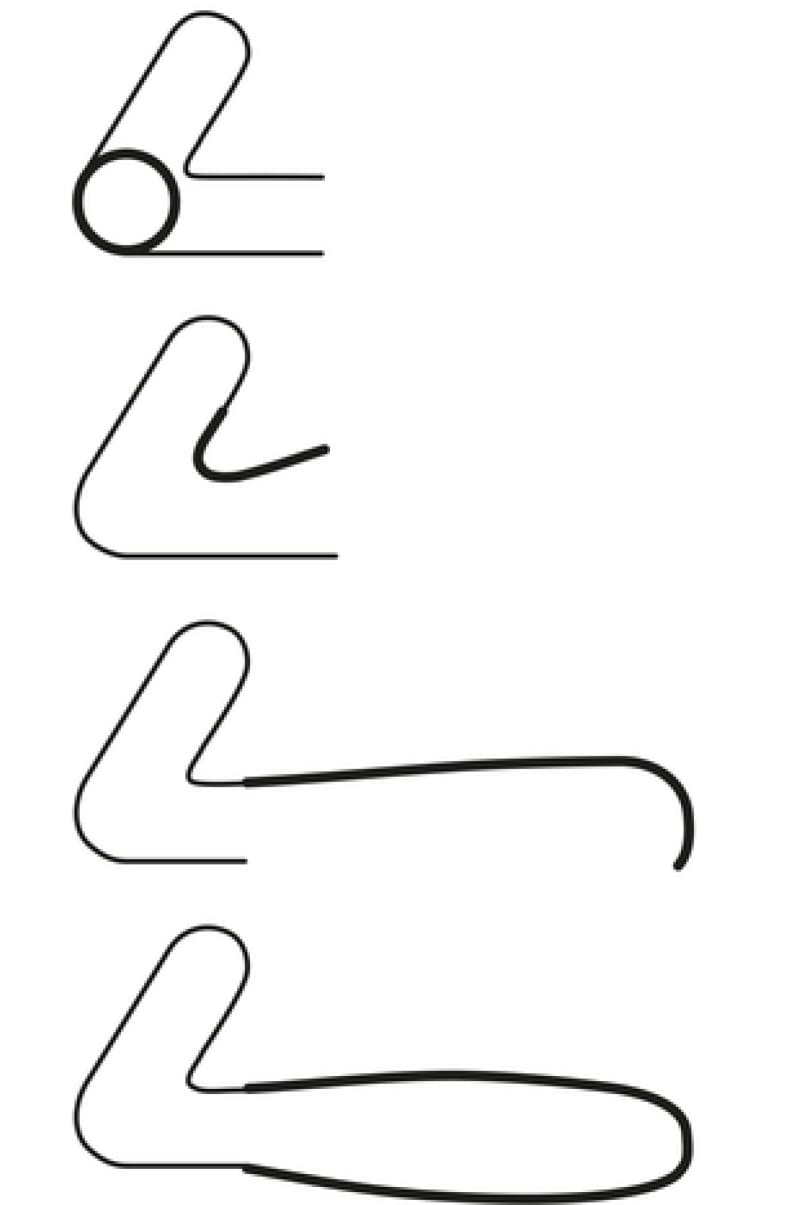

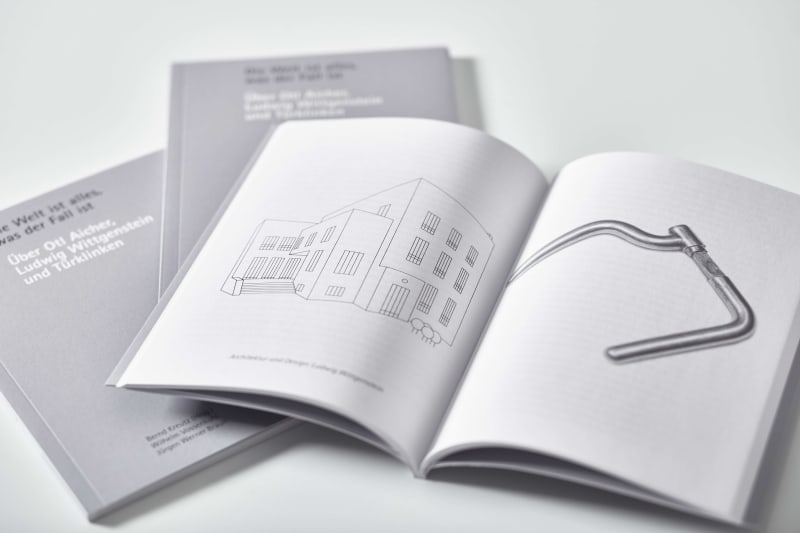
FSB celebrated its 100th anniversary in 1981. Jürgen Werner Braun assumed leadership of the company and brought in Otl Aicher, one of the most influential designers of his time. Aicher developed the four principles of grasping — a guiding philosophy that FSB still applies today. In 1985 Aicher created the new FSB logo, inspired by the shape of the lever handle designed by philosopher Ludwig Wittgenstein for his sister’s house in Vienna — a symbol of clarity and functionality. The following year, FSB invited international architects and designers to Brakel for its first door handle workshop. With designs by Dieter Rams, Mario Botta, Hans Hollein, and Alessandro Mendini, the workshop set new standards in door handle design and laid the foundation for authored design — a concept that continues to define FSB to this day.
-
International authored design and in-house designer Hartmut Weise

Continuing the tradition of the door handle workshop, FSB invited the British designer Jasper Morrison, who was little known at the time, to reinterpret Johannes Potente’s molded-to-the-hand concept. Philippe Starck challenged the industry with his bold FSB 1191 design, while FSB 1111, “La Carotte,” combined aluminum with translucent colored plastic. The Danish designer Erik Magnussen created a handle in folded stainless steel, evoking the wingbeat of a seagull. In the early 1990s Hartmut Weise succeeded Johannes Potente as FSB’s in-house designer. Echoing the contemporary ecological awareness, his idea for a stackable handle with a teardrop cross-section — the Brakel lightweight — marked a breakthrough in sustainable product design exemplified by frugal material consumption.
-
Design for Berlin, bronze revival and purism
The Design for Berlin series was inaugurated at the end of the 1990s, and the British architects Nicholas Grimshaw and Richard Rogers designed custom handles for their buildings in Charlottenburg and Potsdamer Platz. Josef Paul Kleihues’ model was installed in the Kant Triangle, and Hans Kollhoff reinterpreted a handle by Mies van der Rohe — used in the Kollhoff Tower and the Leibniz Colonnades in West Berlin. Following the stainless-steel boom of the 1990s, FSB reintroduced bronze in the 2000s. The naturally aging surface remains a favorite, especially for cultural and renovation projects. The authored design program was expanded to include new models by David Chipperfield and Christoph Mäckler.
-
New designs and finishes

FSB embraced dark anodized finishes with a satin sheen — in 2017 the business journal Wirtschaftswoche wrote: “Matte is the new gloss.” The British architect John Pawson designed a handle for the Berlin-based Feuerle Collection based on Hans Poelzig’s classic high-oval form. With FSB 1267 — the Homage to Mies van der Rohe — FSB‘s in-house designer Hartmut Weise created one of the brand’s most popular recent models. Available in Les Couleurs® Le Corbusier®, the design also expanded FSB’s color palette — “As you like it.” In addition, the new in-house design FSB 1289 affirmed the commitment to clarity of form. Like the Homage to Mies and FSB 1292, it is available in the new resource-saving Aluminum Pure finish. Since 2024, FSB 1292 by Foster + Partners Industrial Design has impressed the market with its gentle contours and distinctive grip area — forming the most extensive product family in the FSB range.