
Apartment Building on Sittertalstraße
Studio Romano Tiedje
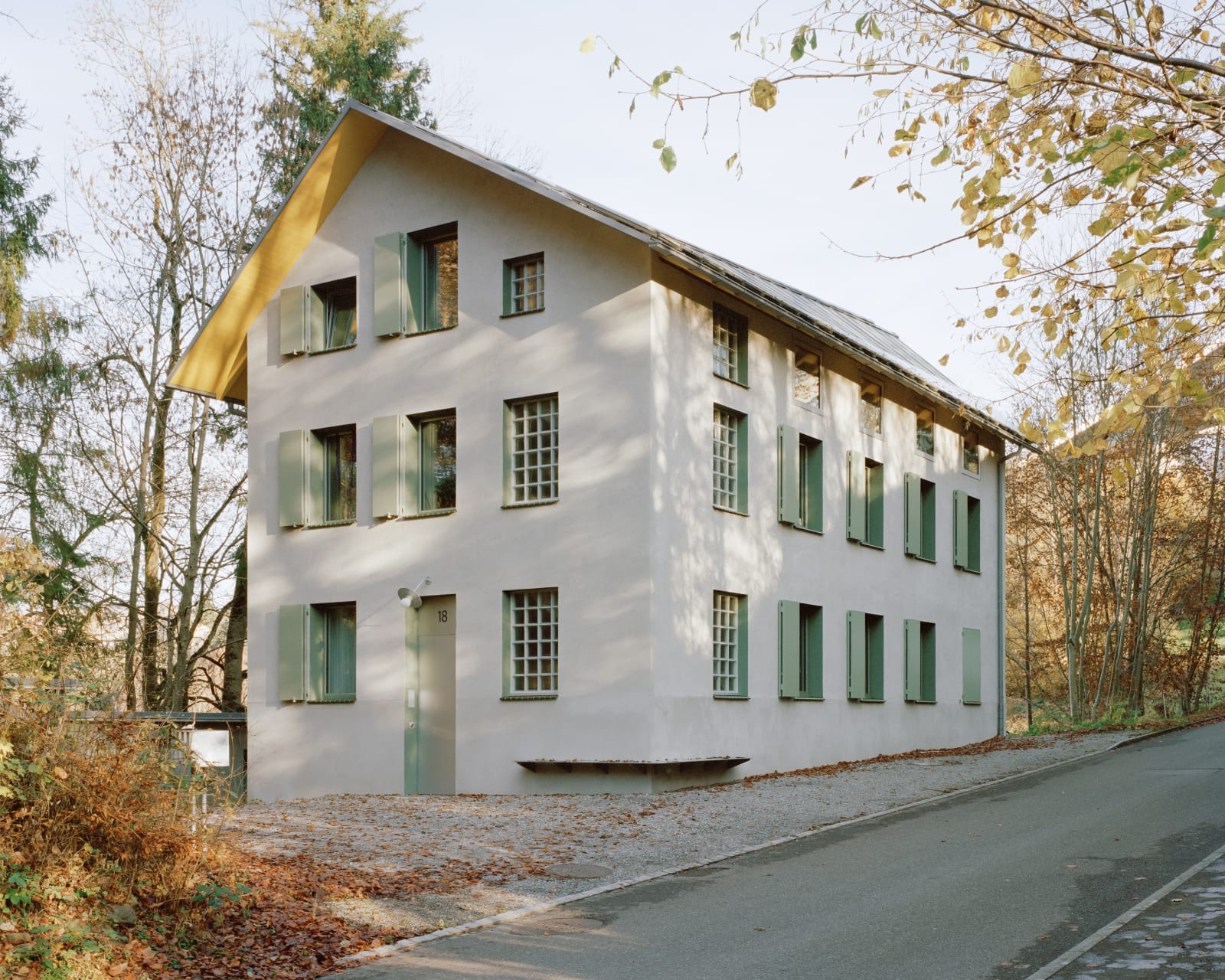
The apartment building on Sittertalstraße in St. Gallen is Studio Romano Tiedje’s debut project. In 2019, the Swiss nonprofit foundation hausen+wohnen commissioned them to conduct a feasibility study for the renovation of a four-story apartment building dating from around 1900 in St. Gallen. Initially, the Canton of St. Gallen rejected the construction project, but an agreement was reached on a replacement building, which was completed in 2024.
Address/Directions
Apartment Building on SittertalstraßeSittertalstraße 18
9014 St. Gallen Directions


Lisa Tiedje and Luca Romano met in Berlin while Luca Romano was still a student. The house on Sittertalstraße was to be Studio Romano Tiedje’s debut project. In 2019, they were commissioned by the non-profit foundation hausen+wohnen to conduct a feasibility study for the renovation of a four-story apartment building dating from around 1900 in St. Gallen. At first, the Canton of St. Gallen rejected the project because it was located too close to the edge of the forest; however, an agreement was reached on a replacement building, shifted four meters from the original site but with the same volume, which was completed in 2024.
The property in St. Gallen’s Sittertal was a classic Swiss workers’ house belonging to a former St. Gallen dye works and was in dire need of renovation. Today, the complex houses the St. Gallen Art Foundry, which in 2025 was awarded the Prix Meret Oppenheim, the Swiss Grand Prix for Art, by the Swiss Federal Office of Culture. According to its charter, the hausen+wohnen Foundation is committed to maintaining affordable rents, so the goal was to construct the replacement building as cost-effectively as possible.
The question arose as to what is worth preserving in terms of protecting the townscape and what can or must be reimagined. The intention was not to build a replica. After being commissioned, Lisa Tiedje and Luca Romano moved to St. Gallen and took over construction management, with a 350-meter walk to the construction site.

“We were constantly concerned with the robustness and longevity of materials. We keep asking ourselves why materials are so often alienated. Only the material’s original state allows it to age.”
In the interest of preserving the townscape, the old façade structure was retained. The resulting constraints posed by the many windows were alleviated by slanted walls, allowing large rooms to be made smaller and small rooms to be made larger. The idea of green shutters was retained, but the windows themselves were made larger. A large window sash now opens, sitting flush with the wall so that no window sills are needed. Cost-saving measures were implemented throughout to keep the renovation within the planned budget and thus ensure sustainable living below the market rent level. These reductions in design and execution hold potential. For example, the wood-metal windows open nearly 180° toward the exterior wall thanks to their flush installation.
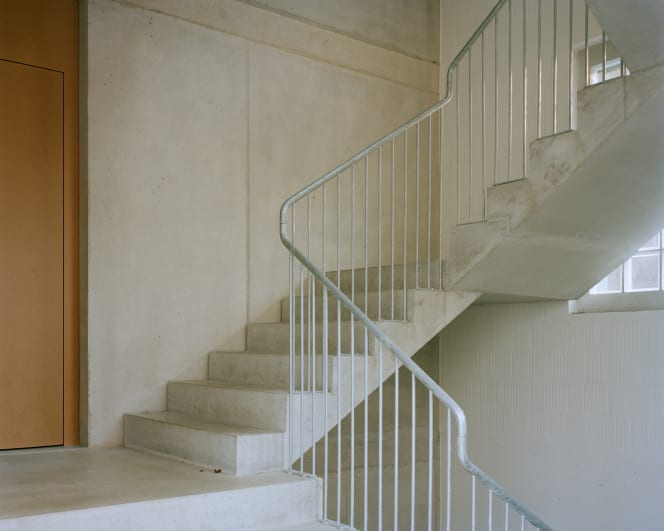
To complement the shutters and the surrounding forest, the washed-plaster facade was finished with green Andeer, a decorative plaster aggregate. The interior masonry remained unplastered, as the concrete’s visual quality is relatively high. The color scheme of the yellow sub-roof, reminiscent of traditional timber construction and the painting styles of Appenzell, was being preserved in consultation with the lead St. Gallen historic preservationist. Elements such as the green-glazed clinker window sills or the glass blocks are new additions. The atmospheric light falling into the stairwell through the glass blocks softens the harshness of the concrete. The play of light transforms the stairwell into the “lantern” of the house – at the same time, it serves as a meeting place for the four tenant households, rather than the previous three. Due to the location having been shifted by four meters, the house now sits on the mountainside, creating space for an additional studio apartment on the ground floor.
Contact with FSB was established through Heike Hanada, who in 2019 opened the Bauhaus Museum Weimar with FSB 1147 in the Aluminum Pure finish, which had not yet been officially introduced at the time. Samples were selected during the early planning phase in the private apartment in Berlin. It became clear early on that the “Wittgenstein handle” would be installed in the raw, slide-grinded aluminum finish, and so Studio Romano Tiedje later appropriately chose to construct the balconies, as well as the bench and lamp in the front garden, from hot-dip galvanized steel.
Before founding the studio Romano Tiedje together with Luca Romano, Lisa Tiedje worked in the production department of artist Ólafur Elíasson. The value of materials’ vitality and the responsibility toward their authenticity always played a major role there.
The theme of sustainability runs through the project not only in terms of the ongoing reduction of the design but also in the sense of social sustainability – namely, creating affordable housing. Of the three tenants from the old building on Sittertalstraße, two moved into the new replacement building. Two more joined them. Lisa Tiedje and Luca Romano continue to live and work in St. Gallen, within walking distance of the apartment building on Sittertalstraße.

© Jeremiah Schwery


Interested?
We're happy to help.

Alessa Kaiser
Head of Architect Consulting
kundenservice@fsb.de +49 5272 608200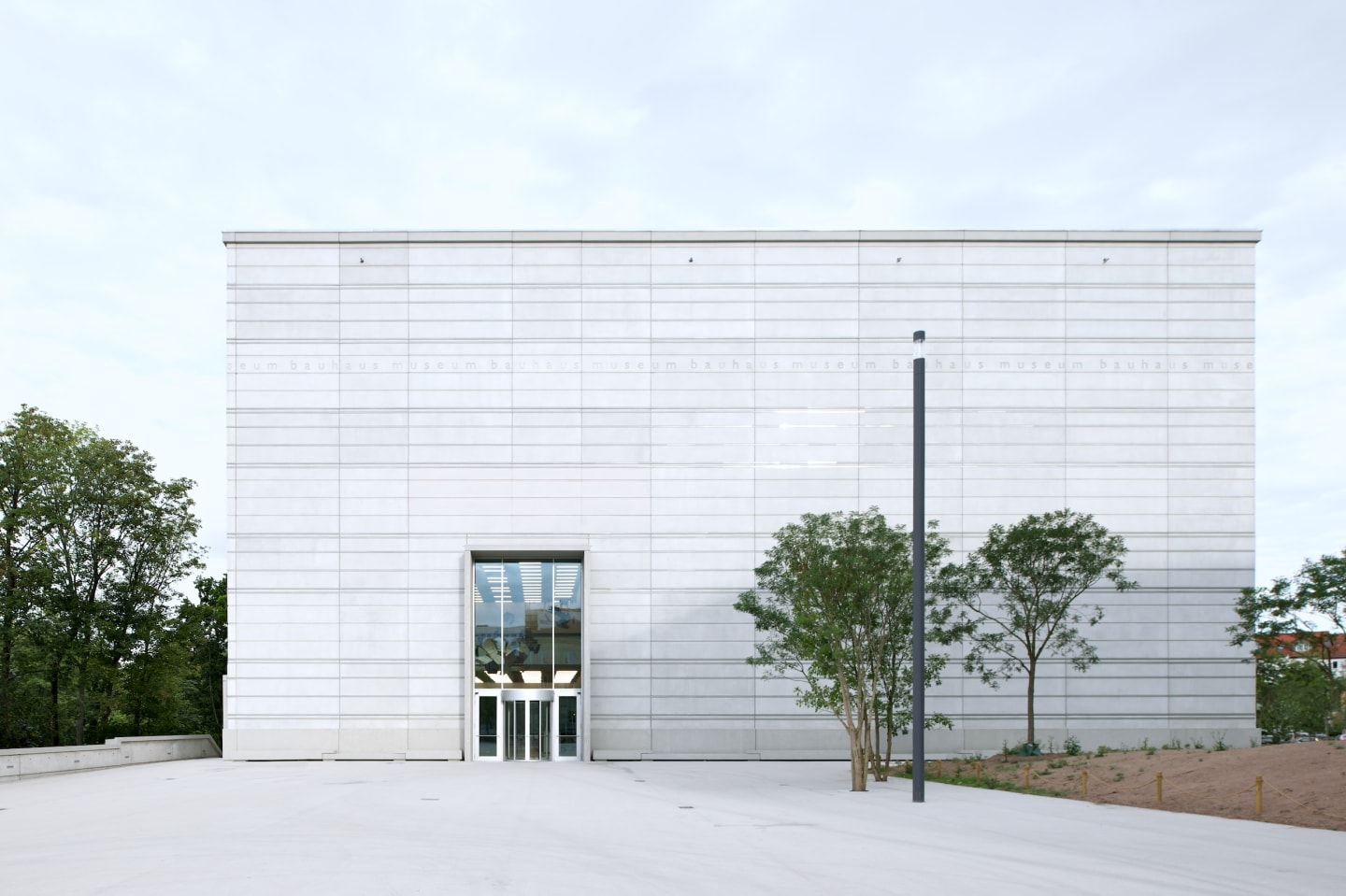


Newsletter
The FSB Newsletter formats keep you informed about product innovations and current topics.