
New Architecture for School Design
Learning Space Is Living Space

Author: Katharina Sommer
In recent years, an increasing number of school buildings and renovations have been realized in which pedagogical concepts play a more integral role in the architecture. Traditional corridor schools designed for front-of-class instruction have long been considered outdated. Today, learning environments are expected to become living spaces.
Teaching and learning therefore take place in so-called learning landscapes or based on the learning-house concept, just two of many models designed around open forms of instruction. Students and teachers can choose from a range of learning settings, from group rooms to quiet individual workstations, and combine them as needed.

The extension to an elementary school in Kestenholz, Switzerland, by architects Ern+Heinzl. Together with the existing building, the understated, monolithic new volume frames the school courtyard.
© Stefan Josef Müller
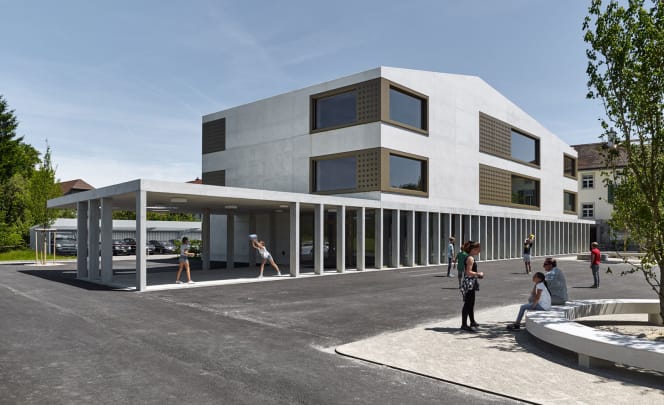
Exterior and interior views of the elementary school in Kestenholz, Switzerland, by architects Ern+Heinzl.
© Stefan Josef Müller

© Stefan Josef Müller
This approach was realized, for example, by Solothurn-based architects Ern+Heinzl in their extension to an elementary school in Kestenholz, Switzerland. Here, they replaced a 1950s building with a three-story exposed-concrete monolith that, together with the existing buildings, encloses the school courtyard. The interior is equally restrained. Exposed concrete is set off by oak built-in cabinets, storage, and deep window reveals that double as seating.
The classrooms work in a traditional sense, but they can also be linked to form larger learning units. They are connected by bright foyers whose generous proportions make them suitable for school activities as well. The corridor takes on a new role: no longer just circulation and an egress route, it becomes an additional learning area. How this can work is demonstrated by PECK.DAAM Architekten in their extension to an elementary school in Puchheim near Munich.

Another example of contemporary school design: the extension to an elementary school in Puchheim near Munich by PECK.DAAM Architekten.
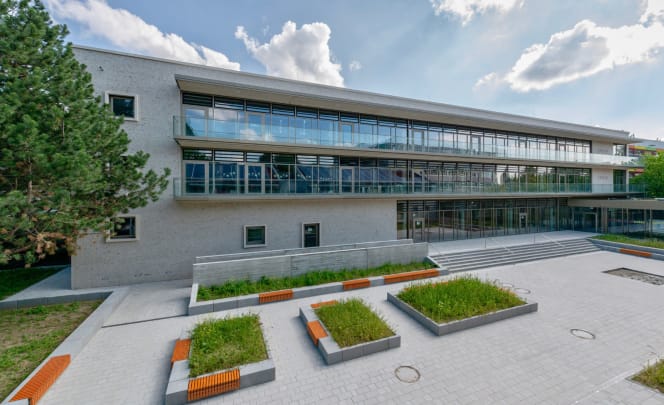
Here the architects translated current educational concepts into spatial form, too. Groups of four classrooms are organized around a so-called marketplace.
They expanded the undersized 1960s school complex with a three-story addition. Inside, groups of four classrooms are arranged around a so-called marketplace that, thanks to flexible furnishings, can be used in a variety of ways. Large expanses of glazing create direct visual connections, allowing teachers to keep an eye on students even when they are working in another room.
In this way, students are encouraged to develop greater autonomy and independence. Yet such freedom in how spaces are used and organized also calls for a clear floor plan structure and a coherent design language. That this need not result in monotony is demonstrated by W&V Architekten with the Forum Thomanum Elementary School in Leipzig. To the existing buildings, they added a compact, three-story cubic volume with a fully glazed ground floor.
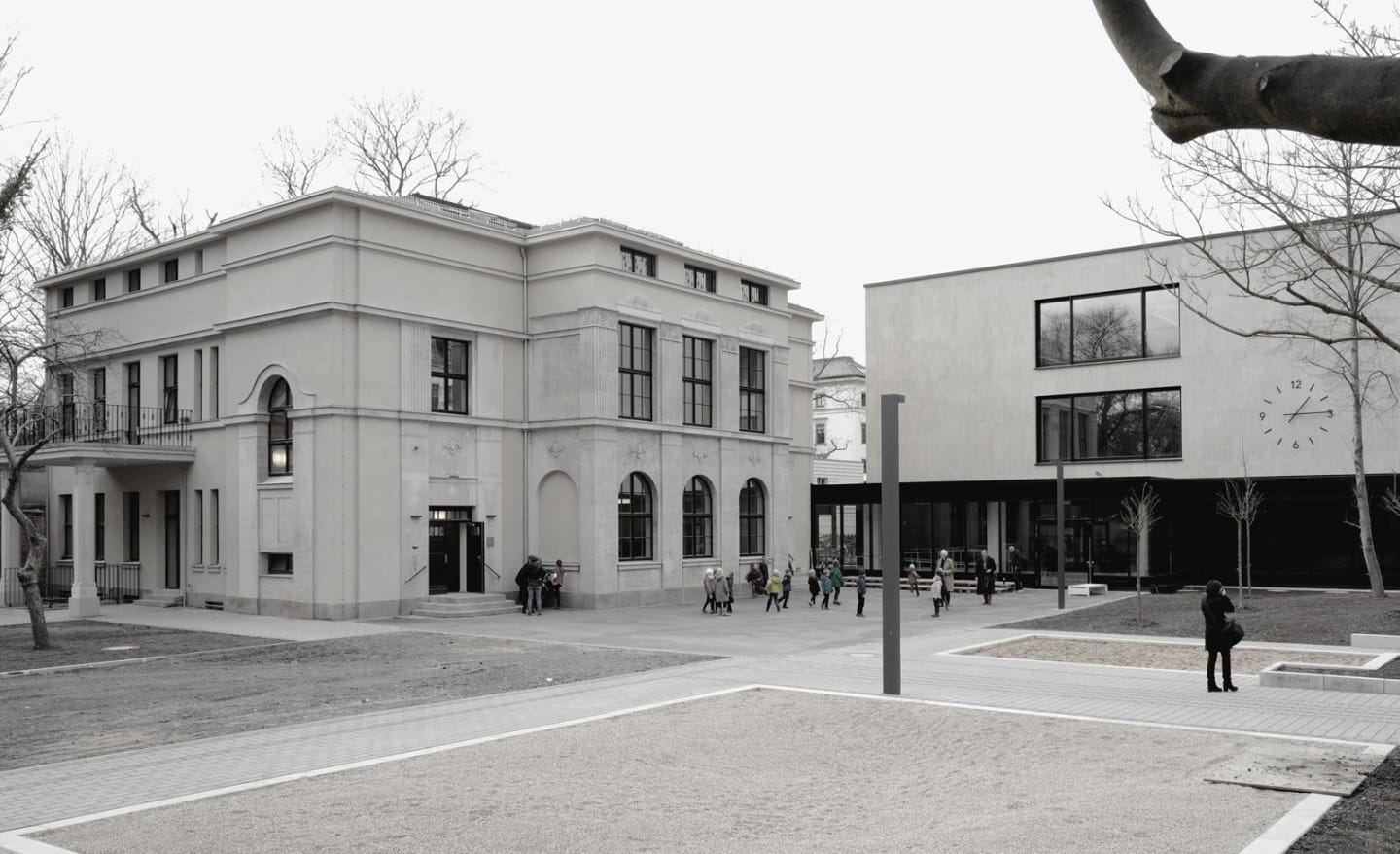
Extension to the Forum Thomanum Elementary School in Leipzig, on the right, by W&V Architekten.
© W&V Architekten

Interior view of the extension to the Forum Thomanum Elementary School in Leipzig by W&V Architekten.
© W&V Architekten

The spaces are not designed for front-of-class instruction, but instead support flexible use.
© W&V Architekten
With its light beige plaster facade, the addition echoes the neighboring Wilhelminian-era building. Inside, a palette of soft, understated pastels sets the tone, paired with simple, restrained furnishings. As in the projects mentioned above, the classrooms, arranged in a U-shape around a multi-story hall, are not designed for front-of-class instruction, but instead support flexible use. The Standing Conference of the Ministers of Education and Cultural Affairs estimated that the number of students in Germany will increase by nearly 300,000 between 2016 and 2030.
The need for additional schools is therefore substantial. And the opportunity to explore new concepts is just as great, shifting the focus away from architecture as an object and toward the people who use it every day, from the youngest learners to the adults who support them.

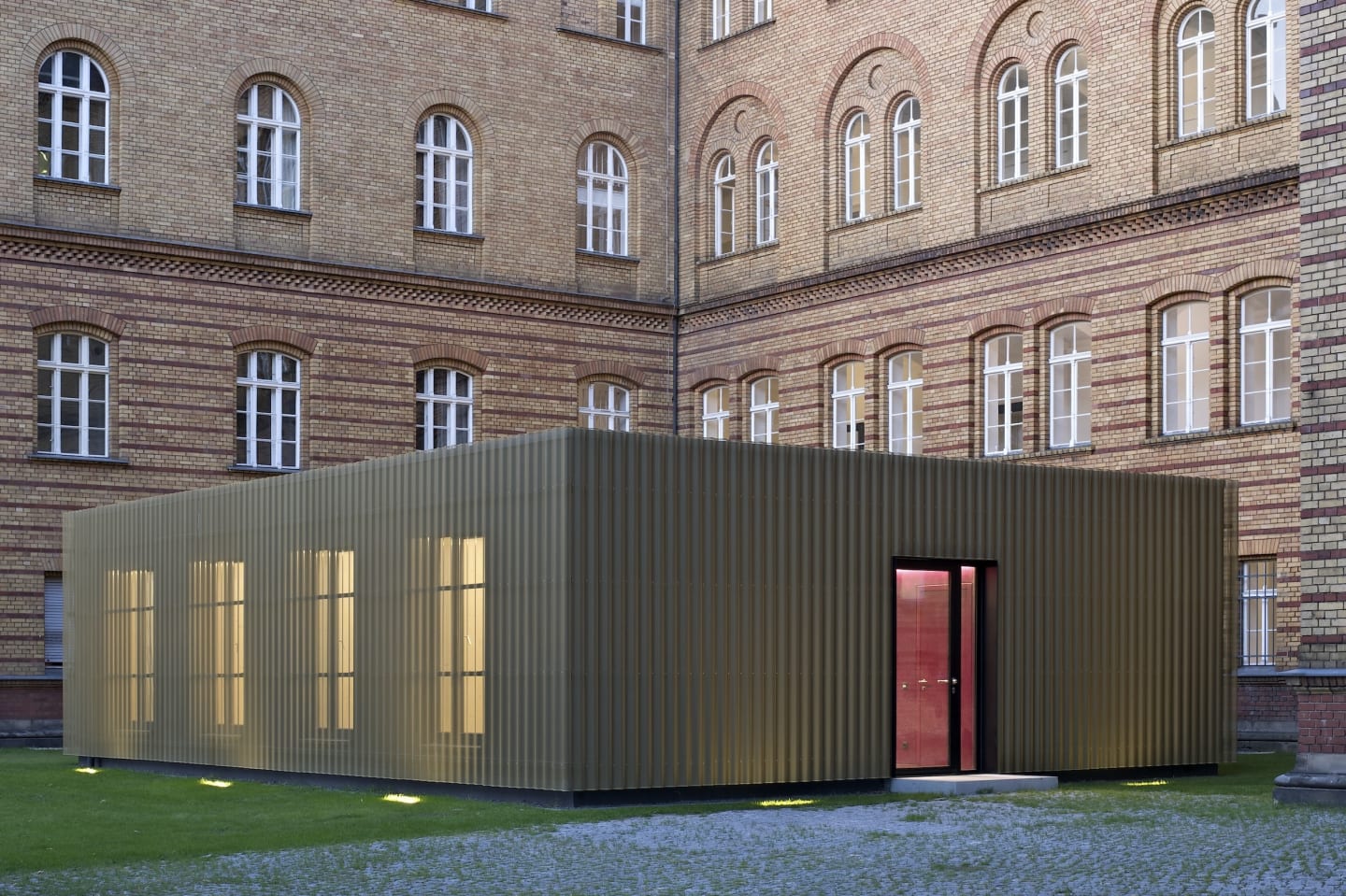
The addition to the Campus Rütli Community School in Berlin by Schulz und Schulz Architekten.
© Gustav Willeit

Shortly before completion: the new addition to the Campus Rütli Community School in Berlin by Leipzig-based Schulz und Schulz Architekten. As in several other projects, they specified the FSB 1232 door handle family here, which is particularly well-suited to educational facilities.
© Gustav Willeit

© Gustav Willeit

For the specific demands of educational facilities, FSB developed a dedicated door handle: the FSB 1232. It meets all requirements for injury prevention, yet still stands out with a crisp, linear design and a decidedly angular profile.
Additional educational institutions featuring FSB:


Newsletter
The FSB Newsletter formats keep you informed about product innovations and current topics.