
Haufe Petereit Restore a Townhouse in Lübeck’s Historic Center
The Fascination of Being Guided by a Building

© Jewgeni Roppel
Author: Ann-Kristin Masjoshusmann
It all started in 1996 on Fleischhauerstrasse, in the heart of Lübeck’s artisan quarter, with the purchase of a home whose foundation dated back to the 16th century. The two architects spent five years restoring the building and lived there for sixteen. Even before they moved in, their architectural office—also located in the neighborhood—had already outgrown its space, prompting another purchase just down the street.
That’s how things go in Lübeck. Real estate is not traded online, but passed along in person through neighbors, with patience, and without pressure. Their growing family and the desire for an additional apartment and a workshop space led to the next chapter—unsurprisingly, also on Fleischhauerstrasse. What began as a simple inquiry about space for Jörg Haufe’s motorcycle workshop ended in 2018/19 with their move into number 75.
The property’s original owners, the Kahns family—painters for three generations—had occupied the building since 1942. Their doctrine was clear: “A Kahn never sells.” But over the course of three years, conversations unfolded about the 500-square-meter disused workshop, a ladder storeroom, a front building with apartments, and a typical Lübeck-style rear atelier house accessible only through a courtyard. Architecturally characteristic for the city and just the kind of challenge the architects thrive on.

© Jewgeni Roppel

“I’m fascinated by the way a building guides you. When I work with an old structure, I can’t simply impose my own design. The house sets the parameters. It changes its mind during the process, reveals treasures and obstacles—and that’s when I do my best work.”
In early 2015 came the decisive phone call. Eight weeks later, the deed was signed. Building permits and landmark protection requests were submitted. After Easter, construction began.
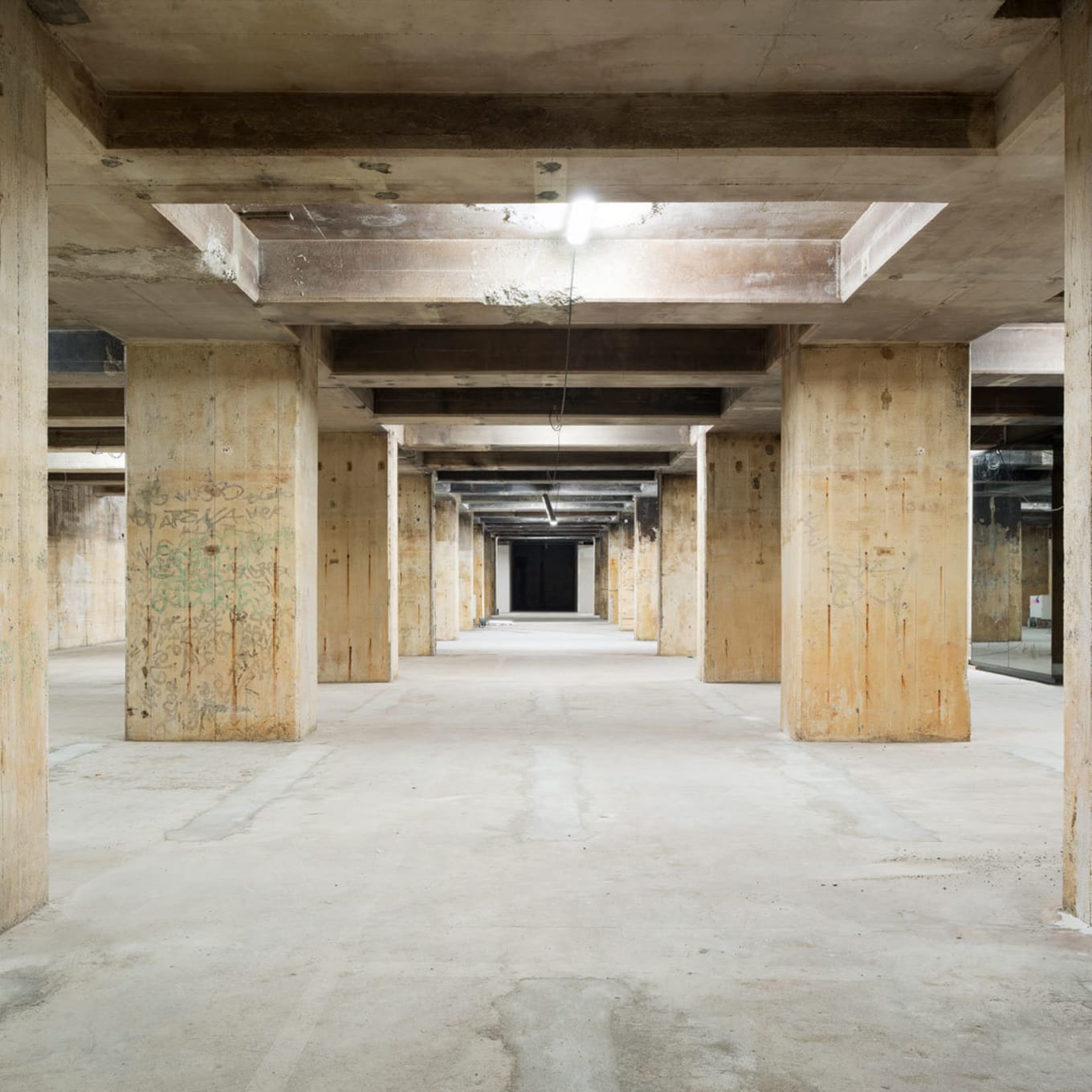
The first weeks were devoted to what Petereit calls “meditative clearing.” The former owners had left the painter’s workshop untouched for over three years—full of relics from decades of trade. Among the discoveries: a master craftsman’s certificate from the grandfather, 13 tons of expired paints and chemicals, and stacks of magazines—some dating back to the prewar era—on lettering and design theory.
The house breathes history—through every room, niche, and beam. Between ceiling joists, they found copper seals for sailor’s buttons from the late 19th century—a clue to the space’s former use as a stamping workshop, which also explained the unusually massive beams in what is typically a light-framed rear house. Rear buildings like these are typically more delicate in scale and far less generous in their proportions.


© Jewgeni Roppel
The architects remain committed to a guiding principle: making a clear distinction between old and new. “In Lübeck, people tend to restore things to their original state. It can get overly quaint, like stage scenery,” Petereit notes. “We always ask: How much new can we introduce without being too brutal? The building shouldn’t look injured, but it shouldn’t be disguised either.”
One former workshop room revealed paint layers centimeters thick, coating floors and walls from decades of brushes being struck and rollers unloaded. For the architects, it became an aesthetic and symbolic artifact, one worth preserving. All existing elements were left rough, visibly aged. All new additions were clean, angular, minimalist, flush.

@ Jewgeni Roppel
Ms. Petereit, Mr. Haufe, what remains valuable—perhaps even sacred—about building today?
Beauty. And not just in the eye of the beholder, but in the dialogue between an object and its surroundings, between the house and its environment, between interior design and existing structure. The foundation is a story the building must be able to tell. An aesthetic that moves people—viewers, visitors, users—and creates a sense of joy. In our work with historic buildings, that almost always means uniqueness: a once-in-a-lifetime situation defined by the existing substance, the client’s needs, the spirit of the time, and the design of new elements.
What was the most treasured thing you owned during your student days? And what is it now?
Then and now: objects with a story. Pieces of design history, but also items with personal value—passed down through family or friends. Back then: a carefully curated mixtape, a model in progress, a vintage 1966 Dutch stroller, a photo album, a painting… Today, it’s the sum of those things—our home.
Everything has its place. The house, with all its custom elements from the renovation, has become a cabinet of stories created without outside influence, shaped by our own aesthetic convictions.
What events have changed how you value what’s truly precious?
Personal experience. Events, turning points, travel, loss, new beginnings—all shift our sense of value. Perspective changes with time.
Text first published in BerührungsPUNKTE Magazine
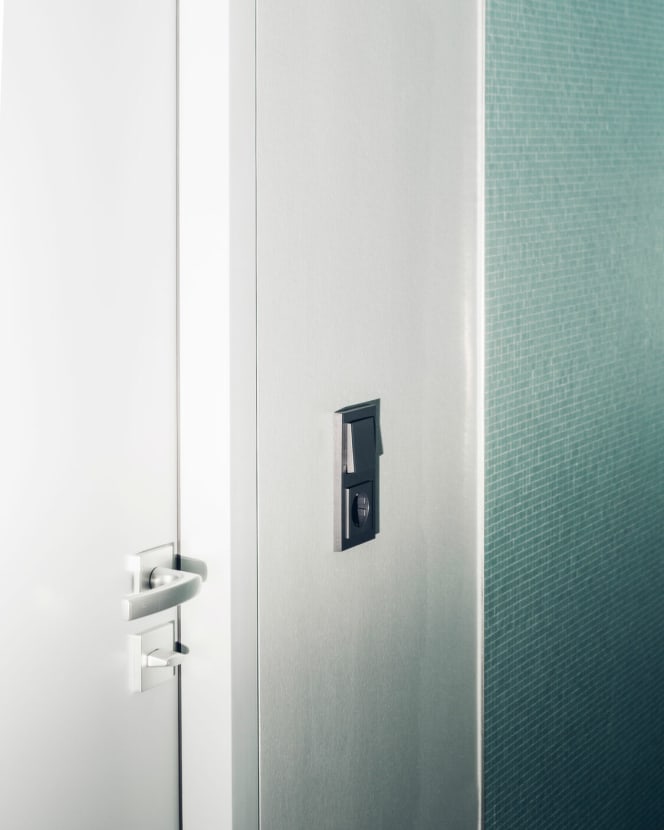
The model used was the FSB 1015 in aluminum, designed by Johannes Potente, with a square rose.


Additional magazine entries on building within existing structures

Newsletter
The FSB Newsletter formats keep you informed about product innovations and current topics.