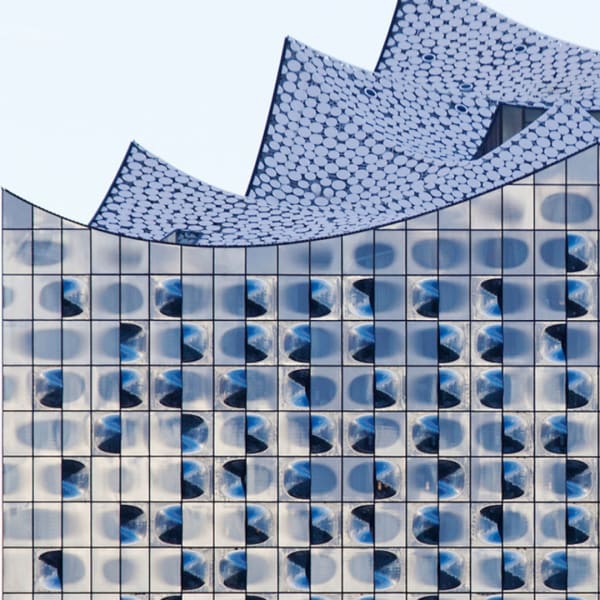


M1 Townhouse, Freiburg Vauban
Barkow Leibinger
With the Stadthaus M1, the Berlin-based architecture firm Barkow Leibinger realized a model project for Green City Freiburg in 2013. Spatially, the pair of buildings marks the entrance to the Vauban district. At the same time, it embodies the neighborhood’s ecological agenda: passive house standard, green commitment, renewable energy. The reinforced concrete skeleton structure is clad in silver fir and animated on its south façade by a living green wall.
Address/Directions
Stadthaus M1Paula-Modersohn-Platz 5
79100 Freiburg im Breisgau Directions

© Zooey Braun

The original door pulls, as specified by Mies van der Rohe, are complemented by custom FSB fabrications, ensuring full compliance with current fire safety regulations.
Evolving Urban Living
Cities, too, are habitats worth protecting, and as such, the subject of environmental policy questions. How can they be designed to be future-proof, ecologically responsible, sustainably livable, technologically up to date, and socially inclusive? In 2013, the Berlin-based architecture firm Barkow Leibinger offered its answer with Stadthaus M1.
The project is an ensemble of two buildings in the Bravour Quarter, a neighborhood defined by low-energy residential standards and passive houses. One building houses Freiburg’s first integrative hotel; the other offers high-end residential and commercial spaces. Between them lies public space: side by side, they frame and reactivate the existing path leading to the tram. Three retail units enliven the forecourt.
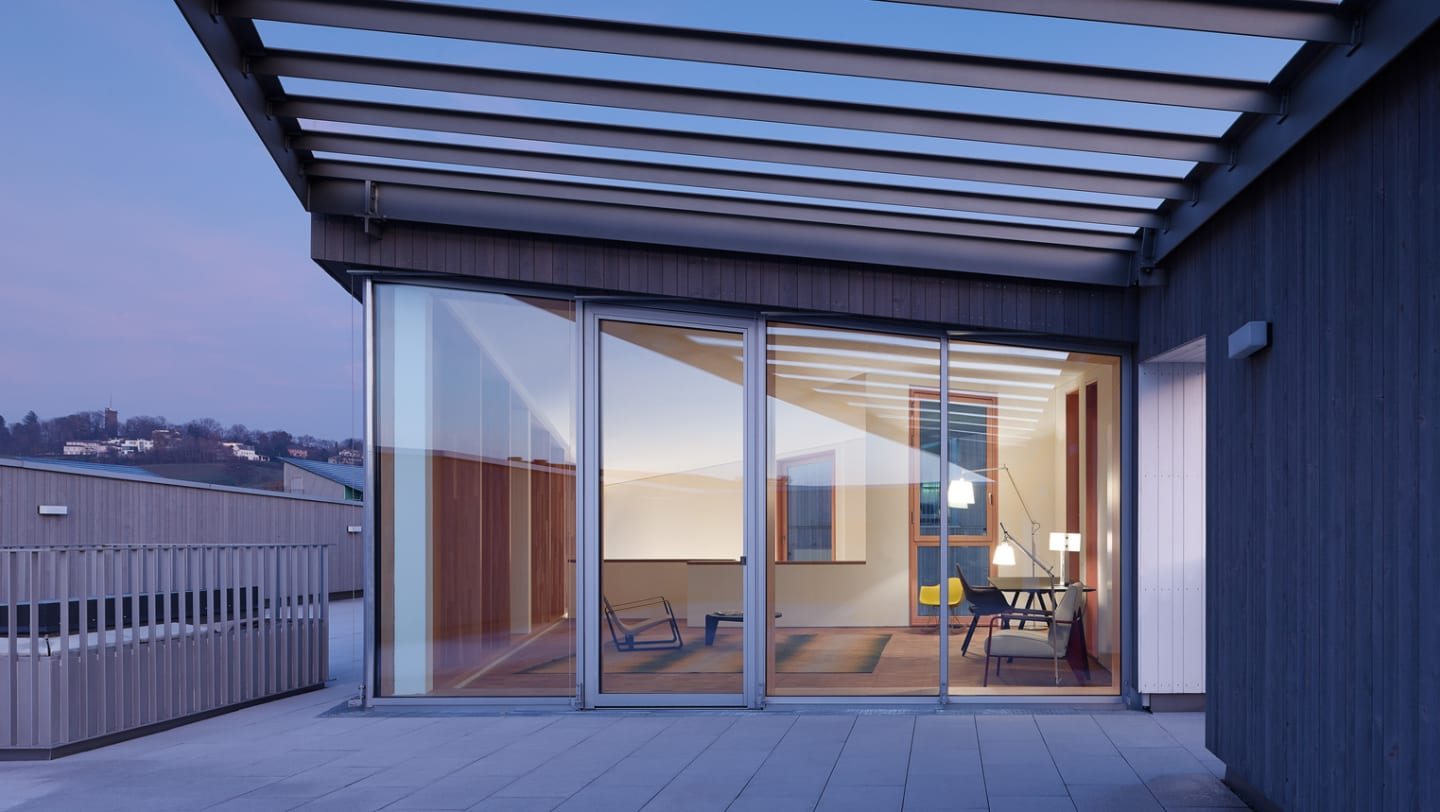
Both buildings are reinforced concrete skeleton structures. Prefabricated timber frame elements form the infill walls. On the north side, vertically aligned cedar fins articulate the silver fir cladding. On the south side, architecture and nature enter into a growing relationship. The low-tech façade is alive. Wisteria, climbing knotweed, roses, and other irrigated climbing plants wind their way up tensioned steel cables to the roofline. They contribute to shading the interiors and regulating indoor temperatures, support air purification, and dampen noise. On this foundation, Stadthaus M1 unites contemporary technical standards in structural design, façade planning, and thermal supply into an energy-forward overall concept.
© Zooey Braun
From the Sun King to the Solar Panel
The urban development of Vauban began in 1994 on the grounds of a former French barracks. The name “Vauban” recalls earlier periods of French occupation in Freiburg: Sébastien Le Prestre de Vauban, fortress engineer under Louis XIV in the 17th century, was responsible for fortifying the city. In contrast to the baroque fortress architecture as the epitome of solid masonry construction, Barkow Leibinger deliberately opted for a lightweight structure.
Together with the insulated façade, triple-glazed insulating windows and active solar shading contribute to temperature regulation. In this combination, the benchmarks of Germany’s Energy Saving Ordinance are significantly undercut. A local woodchip-fired combined heat and power plant provides additional heating and domestic hot water. Photovoltaic panels on the insulated concrete roof crown the sophisticated energy concept.
The Green City Hotel Vauban is located in the head building. The three-star hotel is operated by a nonprofit association as an integration enterprise, employing people with disabilities as well. The ground floor accommodates the lobby, reception, breakfast room, and conference area; the upper floors house 48 guest rooms and one suite. Next door extends the larger residential and commercial building with four- and five-room apartments, a maisonette, and a penthouse unit.
Dynamism and vitality define the appearance of M1. The green façade and its mixed use, from long-term urban living to short-term hotel stays, speak of rootedness and transit alike. The constant coming and going is effortlessly handled by the FSB 1108 lever handle. In developing his design, Hartmut Weise examined universal classics: the Frankfurt Model and the Wittgenstein handle. His conclusion: “an unpretentious presence.” In the 1990s, he created a simple, ergonomic round-bar lever handle. In Vauban, it is complemented by an electronic access control system: present the card, wait for release, then gently press the lever. The model thus also accommodates users with limited grip mobility or heavy luggage. The reliability and precision with which doors open and close, in turn, reinforce the quality of the ecological concept. Solid-core, glass, narrow-stile, and exterior doors throughout the building consistently carry the design language of the access system forward.


Newsletter
The FSB Newsletter formats keep you informed about product innovations and current topics.